If you are over 40, you may have noticed small changes. Carrying groceries up the stairs takes more out of you. Getting up from the floor takes a hand on the couch. A weekend of yard work leaves you sore for days.
Many people take these as the normal cost of getting older. Some of it is. But a large part of it comes from something you can do a great deal about: the gradual loss of muscle that happens when muscle is not asked to work. Strength training is one of the most effective tools we have for keeping your body capable for decades, and it is never too late to start.
What happens to muscle as we age
Muscle mass and strength peak in early adulthood. After about age 30, people who do not train lose muscle at a rate that Harvard Health puts at as much as 3 to 5 percent per decade. The loss tends to speed up in later decades. When it becomes significant enough to affect strength and function, it has a name: sarcopenia.
Strength usually falls even faster than size. Part of that is the muscle itself, and part of it is the nervous system. With age and inactivity, the connections between nerves and muscle fibers, and the brain’s ability to recruit those fibers quickly, decline. This is one reason strength training helps so much: it trains the muscle and the nervous system that drives it.
The encouraging part is that muscle responds to training at every age. Harvard Health describes an analysis of 49 studies in which men aged 50 to 83 who did progressive resistance training gained an average of 2.4 pounds of lean muscle. Older muscle still listens when you ask it to work.
Why muscle matters for healthspan
Muscle is far more than appearance. It is an active organ that shapes how well you live.
- Independence. Getting up from a chair, climbing stairs, carrying bags and catching yourself when you trip all depend on strength. These are the abilities that keep people living on their own terms.
- Falls and fractures. Harvard Health notes that people with sarcopenia have a substantially higher risk of fractures from falls. Stronger legs and better balance lower that risk, and loading the skeleton through training helps maintain bone.
- Blood sugar. Muscle is the largest place your body stores and uses glucose. More muscle, and muscle that is regularly used, helps keep blood sugar steadier.
- Joints. Strong muscles around the knees, hips and shoulders support and protect the joints they cross.
- Mood and sleep. Regular resistance exercise is associated with better mood and better sleep in many studies.
At IFH, longevity means healthspan: the years you live in good health. Muscle is one of the most practical investments you can make in those years.
How much is enough
The CDC’s guidelines for adults call for muscle strengthening activity at least two days a week, working all the major muscle groups: legs, hips, back, abdomen, chest, shoulders and arms. That is the target, and two sessions of 30 to 40 minutes is enough to make real progress.
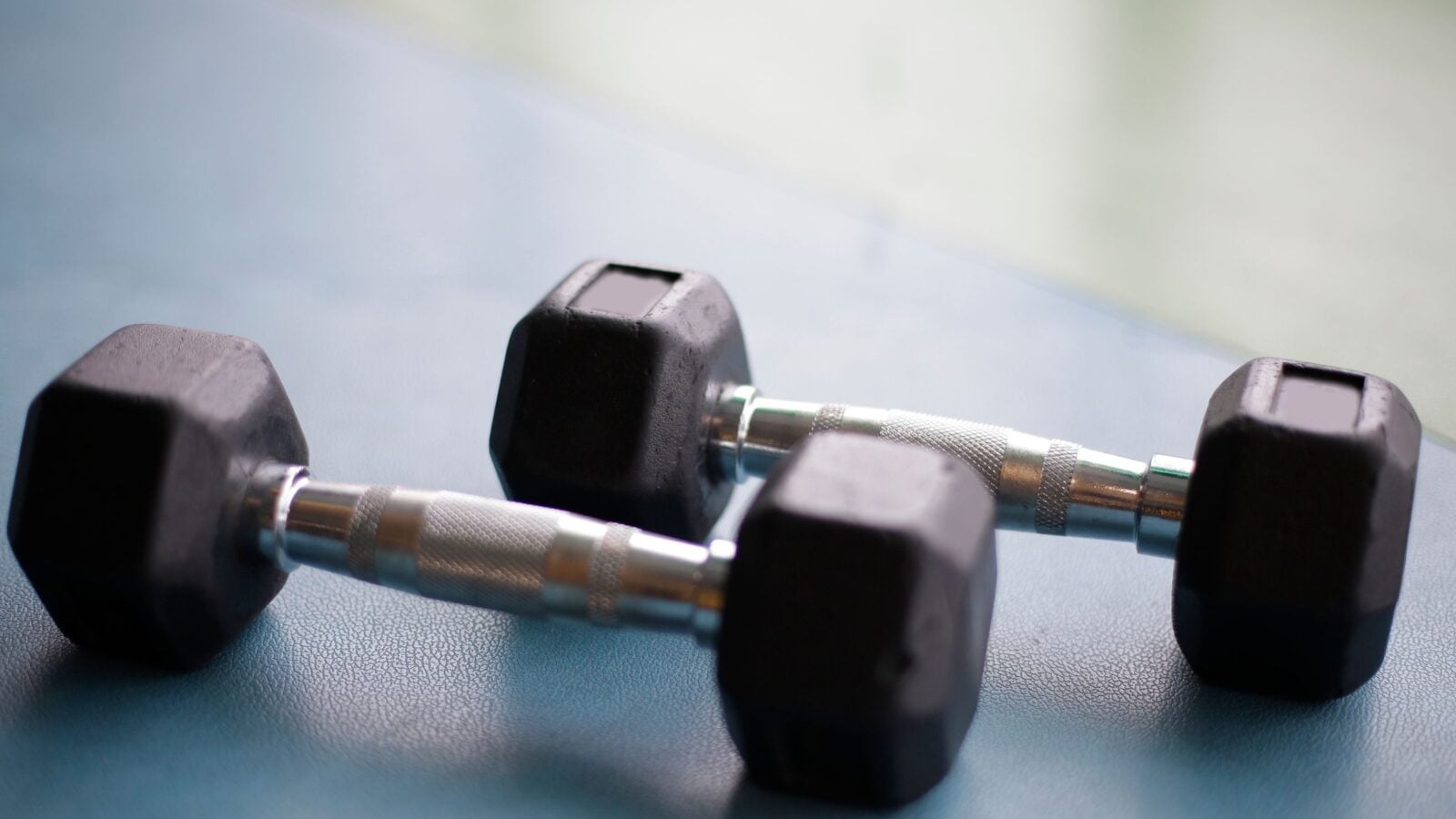
You do not need a gym. Body weight, a pair of dumbbells, resistance bands or a backpack loaded with books will all do the job. What matters is that the muscles work against enough resistance to be challenged.
A simple way to start
Rather than thinking about individual muscles, think about the basic movements your body does every day. A good starting session includes one exercise from each of these:
- Squat: a sit to stand from a sturdy chair, lowering slowly and standing up without using your hands if you can.
- Hinge: bending at the hips with a flat back, as in a hip hinge with your hands sliding down your thighs, or picking a weight up from a low step.
- Push: a wall push up, then a countertop push up as you get stronger.
- Pull: a resistance band row, pulling the band toward your ribs while squeezing your shoulder blades together.
- Carry: walking with a weight in each hand, standing tall, for 30 to 60 seconds.
- Step: stepping up onto a low, stable step, holding a rail if needed.
For each exercise, do 1 to 3 sets of 8 to 12 repetitions. Choose a level of difficulty where the last two or three repetitions feel hard but you could still do two more with good form. Rest a minute or two between sets.
A sample week
- Monday: the six movements above, one or two sets each.
- Wednesday or Thursday: the same six movements, adding a repetition or two where you can.
- Other days: walking or other activity you enjoy, plus a minute of balance practice, such as standing on one foot near a counter while you brush your teeth.
Write down what you did each session, even just the exercise, the weight and the number of repetitions. A simple log shows you when it is time to progress, and it is encouraging to look back after a couple of months and see how far you have come.
The goal is not to exhaust yourself. It is to ask your muscles for a little more than they are used to, and then give them time to answer.
Matt DeWild, RN
How to progress safely
Muscle grows and strength improves because of progressive overload: asking for a little more over time. Harvard Health calls progressive resistance training the most effective way to build muscle at any age. Here is a simple rule for progressing:
- Start with a level you can do for 8 repetitions with good form.
- Over the following sessions, add repetitions until you can do 12 with good form.
- Then make it a little harder, with a heavier weight, a firmer band or a harder version of the movement, and drop back to 8 repetitions.
- Repeat.
A few habits make this safer and more sustainable:
- Warm up first. Five minutes of easy walking or marching and a few slow practice repetitions prepare muscles and joints.
- Breathe through the effort. Exhale on the hardest part of the movement and avoid holding your breath, which raises blood pressure.
- Move with control. Lower the weight slowly. Speed and momentum add risk without adding benefit.
- Expect some soreness, not pain. Mild muscle soreness a day or two later is normal when you begin. Sharp pain or pain in a joint is a signal to stop that exercise and adjust.
- Leave a day between sessions for the same muscles. Recovery is when your body builds.
- Eat enough protein through the day. Muscle needs building material, and spreading protein across your meals supports repair.
If you have heart disease, high blood pressure, diabetes, osteoporosis, joint problems or a recent surgery, check with your doctor before you start, so your plan fits your situation. While training, stop and seek care if you feel chest pain or pressure, unusual shortness of breath, dizziness or a racing or irregular heartbeat.
Your brain is part of this too
Training is a skill. The first weeks of strength gains come largely from your nervous system learning to coordinate the movement and recruit more muscle fibers. That is why consistency beats intensity, especially early on. Two steady sessions a week, done for months, will do far more than an ambitious start that ends in soreness and quitting.
It also helps to connect training to what it is for. Pick one thing you want to keep doing for years, whether that is hiking, gardening, lifting grandchildren or traveling, and let that be the reason you show up.
How we help at IFH
Strength is one of the foundations of Matt’s longevity work, which is designed to help you build the habits, strengths and resilience to stay well for the long run. If you want help fitting strength training into a plan that also looks at sleep, stress, food and energy, functional health coaching is a good place to start. Matt is glad to work alongside your doctor, physical therapist and the rest of your care.