
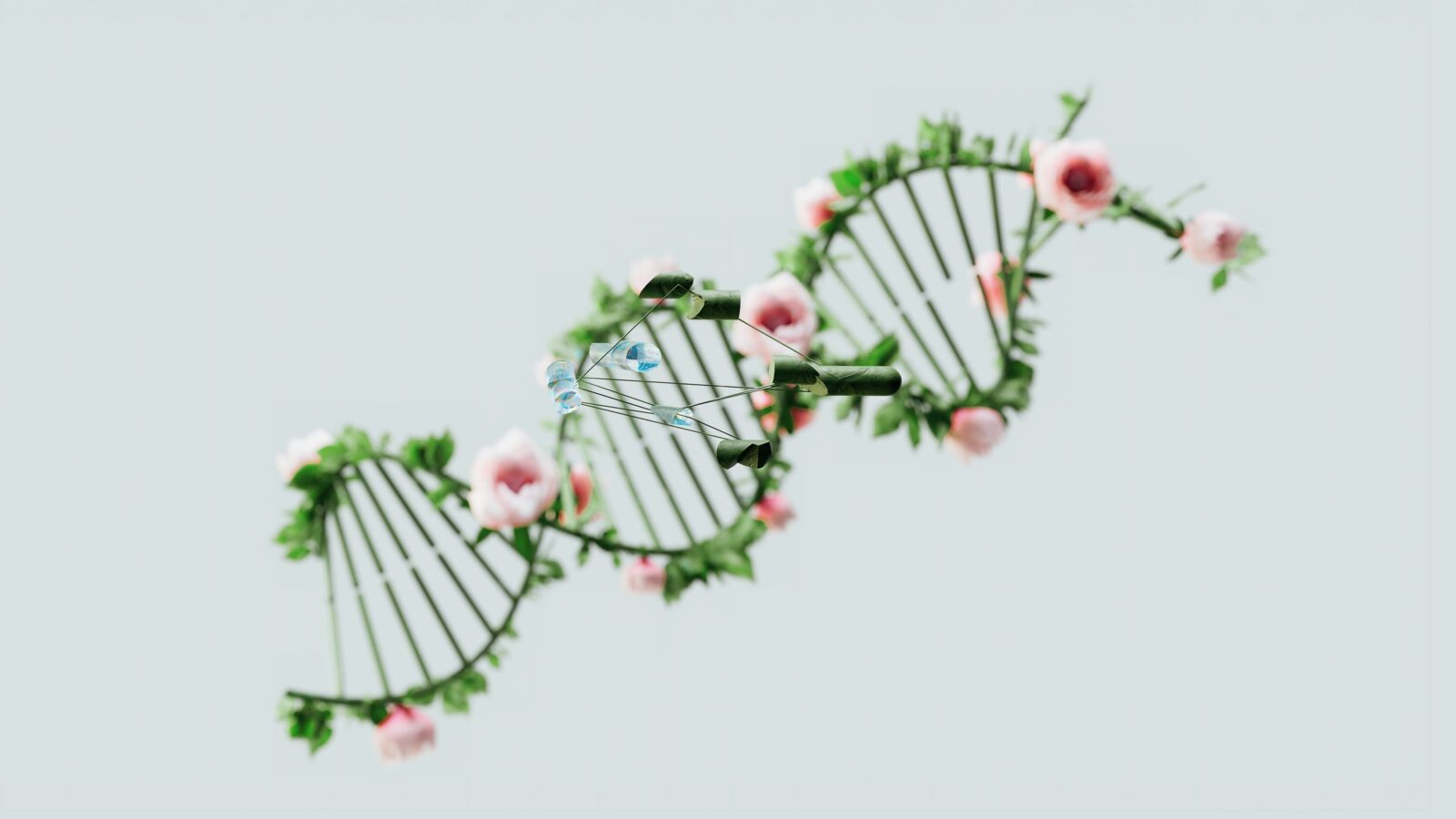
A few decades ago, reading a person’s genes was a major research project. Today you can swab the inside of your cheek at your kitchen table and have results in a few weeks. That is a remarkable change, and it has made genetic information far more accessible.
It has also created a lot of confusion. Some people expect a genetic test to reveal their future. Others dismiss it as entertainment. The truth sits between those two views, and knowing where the line falls helps you get real value from your results without being alarmed or misled by them.
What a genetic test actually reads
Your DNA is a long code of about three billion letters. Between any two people, the vast majority of that code is identical. The differences, small variations scattered throughout, help make each of us unique.
The most common kind of variation is a change in a single letter at a particular spot. Many consumer and wellness tests look at hundreds of thousands of these known spots rather than reading every letter of your DNA. They then compare what they find with research linking those variations to traits, tendencies and health conditions.
That approach is powerful, but it has an important limit. A test can only report on the variations it was designed to look at. Anything outside that list is simply not examined.
One more useful point: the DNA sequence you were born with does not change over your life, so a well done test gives the same answer whether you take it at 25 or 65. What does change is how your genes are used. Your cells switch genes on and off in response to what is happening in and around you, including food, sleep, physical activity, stress and the environment you live in. That is why two people with the same variation can have very different experiences, and why your habits remain such a large part of the story.
Not all genetic tests are the same
It helps to know that genetic tests fall into different families with different purposes.
- Clinical diagnostic tests are ordered by a doctor to confirm or rule out a specific genetic condition, often when there are symptoms or a strong family history. They are designed and checked for that purpose, and results are usually explained with a genetic counselor.
- Consumer health tests are bought directly by the public. Some report on a small number of specific variants linked to disease risk. MedlinePlus, from the National Library of Medicine, notes that additional testing through a healthcare provider is usually needed before these results can be used to diagnose a condition or make healthcare decisions.
- Wellness or functional genomics tests look at variations linked to how your body tends to handle things like food, caffeine, sleep, stress and exercise. They describe tendencies to guide everyday choices rather than predicting disease.
Knowing which kind of test you have taken tells you how to read it.
What a genetic test can tell you
Used well, genetic information can be genuinely helpful. It can:
- Highlight tendencies. For example, some people carry variations linked to processing caffeine more slowly, which may help explain why an afternoon coffee affects their sleep more than a friend’s. Others carry variations linked to lactose intolerance in adulthood, or to how strongly appetite responds to certain foods.
- Add a personal starting point. Most health advice is built on averages. Knowing your own tendencies can help you choose which experiments to try first with food, sleep, activity and stress, rather than guessing.
- Explain past experience. Many people find their results make sense of things they had already noticed, such as why one eating pattern left them hungry or why intense exercise left them drained. That can be a relief, and it can help you stop blaming yourself.
- Prompt useful conversations. Occasionally a result points to something worth discussing with your doctor, who can decide whether clinical testing makes sense.
Your genes describe tendencies, not a destiny. They tell you where to look, and your daily habits decide much of what you find.
Matt DeWild, RN
What a genetic test cannot tell you
This is the part that matters most for peace of mind.
It cannot diagnose you
A genetic tendency is not a diagnosis. Carrying a variation linked to higher risk of a condition does not mean you have it or will develop it. The FDA makes this point plainly about consumer tests: a positive result does not mean you will develop the disease, and a negative result does not mean you are free of risk.
It cannot give you a clean bill of health
Because many tests check only a selection of known variations, a “normal” result does not rule out risk. You may carry variations the test did not look at, and most conditions are shaped by far more than genes. Keep up with the screenings and checkups your doctor recommends regardless of your results.
It cannot account for everything else
Most common health conditions, such as heart disease, type 2 diabetes and many cancers, are influenced by many genes, each with a small effect, together with your environment and habits. Researchers combine these small effects into what is called a polygenic risk score. The National Human Genome Research Institute explains that these scores show how a person’s genetic risk compares with others, but they do not give a baseline or a timeframe. Two people with the same high score, one aged 22 and one aged 98, are in very different situations.
It cannot replace your family history
Your family’s health story captures shared genes and shared environments together. It remains one of the most valuable pieces of health information you have. Write it down if you have not, including the age at which relatives developed conditions.
Getting the most from your results
If you are considering a test, or already have results, a few habits help you use them wisely.
- Know your question before you test. Are you looking for help with everyday choices about food, sleep and stress, or do you have a specific medical concern? The answer tells you whether a wellness test or a conversation with your doctor about clinical testing is the better fit.
- Read the privacy terms. Find out how your data is stored, whether it is shared with third parties or used for research, and whether you can ask for it to be deleted. Your genetic information also says something about your relatives.
- Turn tendencies into experiments. If your results suggest you process caffeine slowly, try moving your last coffee earlier for two weeks and notice your sleep. Treat each finding as a question to test in real life, not a verdict.
- Take serious findings to a professional. If a result suggests a significantly raised risk for a serious condition, talk with your doctor, who may refer you to a genetic counselor. Consumer results of this kind are usually confirmed with clinical testing before any decisions are made.
If a result leaves you anxious, that is understandable. Give yourself time, and talk it through with someone who can put it in context before drawing conclusions.
How IFH uses genetic information
At Integrated Functional Health, genes are one input among many. Functional genomics testing and coaching with Matt uses a simple cheek swab and then turns what your results suggest into practical choices for food, sleep, stress and activity. Results are put to work through the same three principles behind everything we do: Regulate, Integrate and Optimize, the last of which means building the habits, strengths and resilience designed to keep you well for the long run.
If you would like to see how your biology fits into a bigger plan, functional health coaching brings it together with the rest of your health picture. Matt is glad to work alongside your doctor and other care.